Alexa+ Agentic Ads Made Your Amazon Listing the Ad Unit (2026)
 Jun 24, 2026
 This morning, on the first day of Prime Day, Amazon turned the Alexa conversation into a checkout. Its new Alexa+ Agentic Ads let a shopper see an ad on an Echo Show, ask questions, compare options, and complete the purchase without leaving the conversation, from a Papa Johns pizza to concert tickets for Beck, Jill Scott, or Omar Courtz. Most Amazon sellers will file this under advertising news and wait for a media-buying playbook. That is the wrong drawer. The words your listing feeds the assistant are now the thing being advertised.
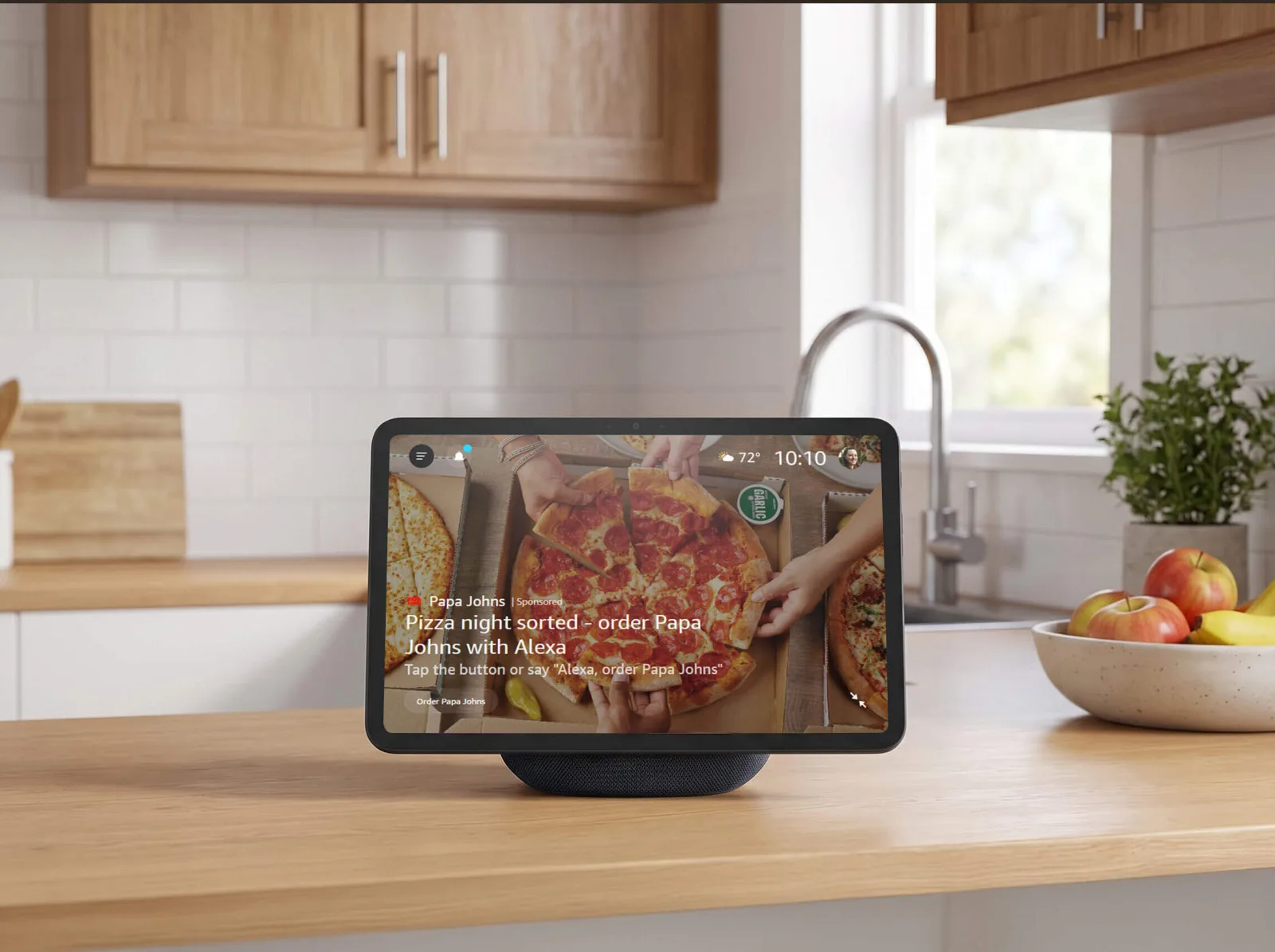
Alexa+ Agentic Ads launched June 23, 2026 on Echo Show devices as the first Amazon ad format that completes a purchase inside the conversation, with no click out to a product page. What the assistant says about your product, whether in a paid agentic ad or a free recommendation, is assembled from your listing copy, your reviews, and your structured attributes, not your bid. The listings that win are the ones that answer the questions a shopper asks out loud, in plain language a model can quote back.
Key takeaways
-
Alexa+ Agentic Ads went live June 23, 2026 on Echo Show, the first Amazon format that takes a shopper from ad to completed purchase inside one conversation. Launch partners include Papa Johns for food and ticketing for Beck, Jill Scott, and Omar Courtz, with seats landing in the shopper's Ticketmaster account.
-
The format sits on Alexa for Shopping, the layer Amazon built in May 2026 by merging Rufus into Alexa+. Amazon reports Rufus reached more than 300 million customers in 2025 (Amazon-reported, not independently verified).
-
The assistant builds its answer from your listing copy, reviews, A+ content, and structured attributes. The same content decides whether you win a paid agentic ad or a free recommendation.
-
Operators are blunt about the order of operations. One commerce exec told Digiday the paid agentic layer is the tax you pay for a weak organic foundation.
-
Across the AI engines Amazify tracks, no agency or tool owns the question of how to make a listing answer what shoppers ask the assistant. It is open territory (Peec, June 2026).
-
The work here is listing optimization, not ad operations: name the buyer's question, answer it plainly, and add the specific attribute the assistant can repeat.
What did Amazon actually launch with Alexa+ Agentic Ads?
Amazon launched a conversational ad format on Echo Show that lets a shopper go from seeing an ad to completing a purchase without leaving the conversation.
As Fast Company reported, the shopper can ask questions, review options, and buy, all by talking to Alexa, and Amazon describes it as its first ad format that completes a purchase inside the conversation. The launch partners are Papa Johns for food orders and three musicians, Beck, Jill Scott, and Omar Courtz, for concert tickets delivered to the shopper's Ticketmaster account. The walkthrough is simple: a shopper sees a Jill Scott concert ad, asks if tickets are available, and Alexa returns dates, venues, and seating to adjust before buying. Amazon says the experience is live today and will expand to more brands.
Why does an advertising change have anything to do with my listing?
Because the assistant does not write its own sales pitch. It assembles what it says from your listing copy, your reviews, your A+ modules, and signals from across the web.
When Alexa answers a question like whether a blender is quiet enough for a baby's nap, it is not reading your keyword string. It is looking for a listing that states the decibel level in plain language. That holds whether the answer is a paid agentic ad or a free recommendation in Alexa for Shopping. The placement buys the moment; your listing decides whether the assistant has anything worth saying.
Is this a paid play or an organic one?
Both, and the organic side decides whether the paid side is worth funding.
The trade press covering the launch keeps circling one point. A commerce exec told Digiday the paid layer is “the tax you have to pay for messing up on the organic side.” If your listing already answers the question, the assistant can recommend you for free. If it does not, an agentic placement just buys a louder version of a pitch the model cannot finish. Amazon notes existing Sponsored Products and Sponsored Brands campaigns are already eligible inside these conversations, so paid and organic pull from the same listing.
What does Alexa actually read when it decides what to say?
It reads the structured and unstructured content of your listing, then leans on Amazon's first-party purchase and review signals to fill the gaps.
In practice that means your title, bullets, A+ content, product attributes, and the body of your reviews. Amazon describes these conversations as drawing on how people shop across its surfaces (see what agentic shopping means for advertisers). The listings that surface are specific where buyers are uncertain: they name the use case, the constraint, and the compatibility. A supplement that states it contains no NSAIDs or corticosteroids hands the assistant a complete, repeatable answer. A listing that says “premium quality formula” hands it nothing to quote.
Where your listing content shows up across Alexa surfaces
|
Alexa surface |
Paid or organic |
What it draws from |
What you control |
|
Sponsored ads in Alexa for Shopping |
Paid |
Existing campaigns plus listing content |
Bid and listing copy |
|
Sponsored Products / Sponsored Brands prompts |
Paid |
Listing content and brand info |
Listing copy and brand store |
|
Alexa+ Conversational Ads |
Paid |
Listing, reviews, web content |
Listing copy and reviews |
|
Alexa+ Agentic Ads |
Paid |
Listing, reviews, catalog, web |
Listing copy and attributes |
|
Organic Alexa for Shopping recommendation |
Organic |
Listing, reviews, first-party signals |
Listing copy, attributes, reviews |
Across every Alexa surface, paid or organic, the listing is the common input.
How do I make my listing answer the questions shoppers ask out loud?
Start from the questions, not the keywords. List what a shopper asks before buying, then make sure the listing answers each one in plain language.
Pull your top revenue ASINs and write the five questions a buyer asks an assistant about each: will it fit, is it safe with X, how long does it last, what is it not good for. Read the listing back as if Alexa were answering. Most listings cover one or two and go silent on the rest. Add the missing answers as specific, quotable attributes in the title, a bullet, or A+ copy, not as a denser keyword block.
If you want a second set of eyes on which questions your top ASINs fail to answer, mapping those gaps is exactly what an Amazify Listing Intelligence audit does.
“When a supplement brand's top listing started naming the specific conditions it was formulated for, it began surfacing in assistant recommendations for questions the old bullet points never answered.” Laura, Marketing Evolution Analyst, Amazify
What are the limits of reading this announcement?
This is a launch, not a finished playbook, and several things are not documented yet.
Amazon has not disclosed pricing, and observers describe the first partners as early tests while success metrics and completion rates get worked out. The experience is limited to Echo Show devices for now. Measurement inside a conversation, where the purchase happens with no click, is an open question advertisers are still raising. Treat the format as a signal of where discovery is moving, not a channel to fund at scale this week. The move that pays off regardless is a listing the assistant can quote.
Action checklist
-
Pull your top 10 ASINs by revenue and list the five questions a shopper would ask an assistant before buying each one.
-
Read each listing back as if Alexa were answering those questions out loud. Mark every question the listing cannot answer in plain language.
-
Add the missing answer to the title, a bullet, or A+ copy as a specific, quotable attribute, not a keyword string.
-
Name the use case and the constraint explicitly: what it is for, what it is not for, what it is compatible with.
-
Audit your reviews for the questions buyers repeat, then surface those answers in the listing so the assistant does not have to infer them.
-
Confirm your backend search terms and structured attributes are complete and accurate; the assistant leans on first-party signals.
-
Re-test the same natural-language queries in Alexa for Shopping after the change and log what surfaces.
-
Before raising agentic or PPC spend, confirm the listing already answers the question. Do not pay to amplify a pitch the assistant cannot quote.
The assistant doesn't read your bid. It reads your listing.
Frequently Asked Questions
Alexa+ Agentic Ads are a conversational ad format on Amazon Echo Show devices that let a shopper complete a purchase inside the Alexa conversation, with no click out to a separate page. The shopper can see an ad, ask questions, review options, and buy by talking to Alexa. Amazon launched the format on June 23, 2026 with partners including Papa Johns and concert ticketing for Beck, Jill Scott, and Omar Courtz.
They launched June 23, 2026, on the first day of Prime Day, and are available on Echo Show devices to start. Amazon has said it expects to add more brands and services over time. Pricing has not been disclosed.
No. They are an addition to Amazon's existing ad suite, not a replacement. Amazon has said existing Sponsored Products and Sponsored Brands campaigns are already eligible to appear inside Alexa shopping conversations, so the new format extends the surface rather than retiring the old ones.
Write the listing to answer the questions a shopper would ask out loud. Name the use case, the constraints, and the compatibility in plain language, and add the specific attributes a model can quote, such as dimensions, materials, or what the product is not suitable for. Keep the answer in the title, bullets, and A+ content rather than only in backend keywords, and make sure your structured attributes are complete.
Not exactly. In May 2026 Amazon merged Rufus into Alexa+ to create Alexa for Shopping, a single AI shopping layer that runs across the Amazon app, the website, and Echo Show devices. It is a merger of the two assistants, not a rename of Rufus.
In most cases, yes. If the assistant cannot find a clear answer in your listing, paying for an agentic placement amplifies a pitch the model cannot complete. Fixing the listing so it answers the buyer's question first protects both the free recommendation and the paid one.
Ready to stop leaving money on the table?
Get a free margin audit and see exactly how much profit you're missing.
Book Your Free Audit →