Amazon Is Building an AI Shopping Flywheel. Your Listing Is the Fuel.
 Jun 3, 2026
 Amazon spent about fifty dollars to put a microphone on your wrist, and most sellers filed it under gadget news. It is discovery news. On May 13, 2026, Amazon retired the Rufus chatbot and replaced it with Alexa for Shopping, an assistant that now lives inside the search bar itself. Add the wristband and a new clinical AI, and the pattern is clear: Amazon is building a system that learns enough about a shopper to act before that shopper ever types a query.
The question for anyone selling on Amazon is no longer where you rank in the search box. It is whether your product is the answer the assistant reaches for, now that the box has become the assistant.
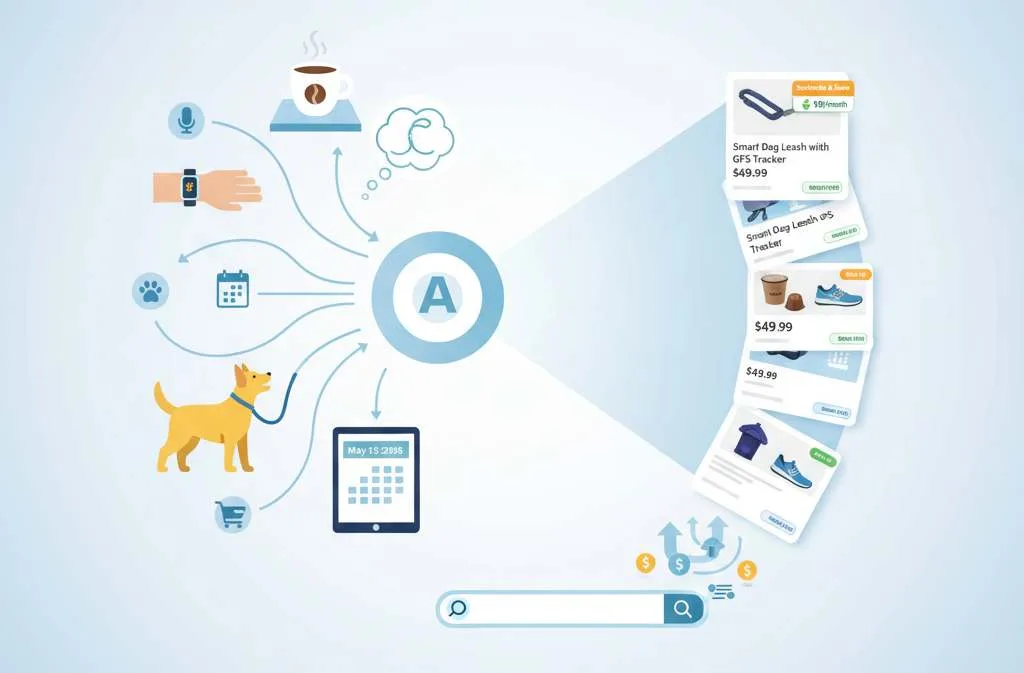
Amazon is assembling an agentic commerce flywheel. Cheap ambient devices and AI assistants capture personal context, that context trains Amazon's assistant, now unified as Alexa for Shopping, to recommend and act, and the resulting purchases and subscriptions fund more reach and more data. For sellers, the practical shift is that discovery is migrating from a typed keyword box to an assistant acting on context, which changes your listing's job from ranking for a query to being the structured, complete answer an AI agent can confidently surface. The brands that make their product data agent-readable now are the ones that assistant will cite later.
Key Takeaways
-
Amazon's reported acquisition of Bee, a 49.99 dollar ambient AI wristband with a 19 dollar monthly subscription, extends Amazon's AI reach outside the home, where Alexa has always stopped.
-
The device is not the point. The personal context and captured intent are. The asset Amazon is buying is knowing what a shopper needs before they type it.
-
The flywheel has four turns: capture context, personalize the assistant, act on intent, reinvest revenue and data. Each turn makes the next recommendation better.
-
On May 13, 2026, Amazon retired Rufus and merged it into Alexa for Shopping, now built into the search bar and free to every U.S. shopper, and the assistant can schedule purchases and complete checkouts, so the act-on-intent step is no longer hypothetical.
-
AI assistants do not surface keyword-stuffed listings. They surface the product whose data most completely and credibly answers a natural-language question.
-
Your listing's job is shifting from keyword density to being the answer an agent trusts, which is a structured-data and completeness problem, not a search-box one.
What did Amazon actually buy when it bought Bee?
Amazon bought an always-listening AI wristband and the company behind it, not a fitness tracker. In July 2025, Amazon confirmed it was acquiring the AI wearable startup Bee, a 49.99 dollar device with a 19 dollar monthly subscription that records and transcribes what it hears unless muted, then turns conversations into to-dos, reminders, and summaries.
It has kept moving. At CES 2026, Bee began drafting emails and calendar events from spoken commitments. One clarification matters for sellers reading the consumer coverage: Bee listens to audio, it does not measure vital signs. It infers patterns from what you say, so the framing that it tracks your health metrics is a misread worth retiring.
Why is a 49 dollar wristband a discovery story, not a gadget story?
Because the wristband is how Amazon reaches the shopper Alexa never could, the one moving through the day away from a screen. Inside the home, Alexa+ can run on up to 97 percent of the Amazon devices in customers' homes, and on May 13 its shopping capability became Alexa for Shopping, built into the search bar and free to every U.S. shopper. Bee covers everywhere the screen is not. The recurring subscription gives Amazon predictable revenue, and the always-on capture gives it a stream of personal context no competitor's home speaker can match.
Strip away the hardware and the asset is intent. A shopper who says they are out of something, planning a trip, or frustrated with a product has handed an assistant a buying signal. The device is just the cheapest way Amazon has found to collect those signals at scale.
What is the Amazon AI flywheel, and how does it spin?
It is a reinforcing loop where captured context makes the assistant more useful, which gets it to act on more of your intent, which throws off revenue and data that fund more reach. Agentic commerce, in plain terms, is the moment an assistant stops answering a question and starts completing the decision for the buyer.
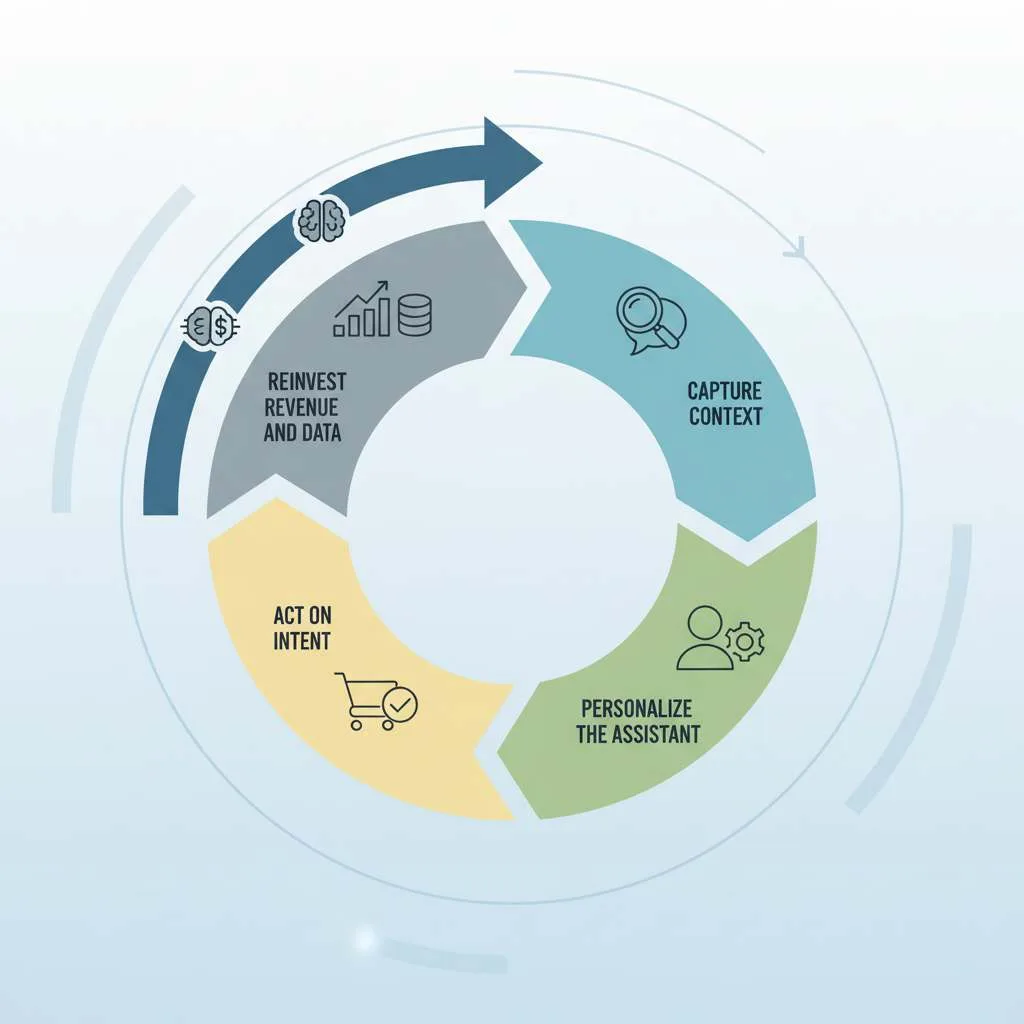
The act step is no longer hypothetical on Amazon's own surface. Alexa for Shopping can schedule purchases, track prices, and complete checkouts, including on sites Amazon does not own. Bee is a step behind, since its Actions feature drafts emails and calendar entries rather than orders. So the open question is not whether an assistant will buy on a shopper's behalf, it is how soon the context Bee captures gets wired into the assistant that already does. That is our read of where the loop is heading, and the read sellers should plan against.
Where does Amazon's health play fit into this?
It is a second flywheel running on the same logic. On top of One Medical, acquired for 3.49 billion dollars in 2023, and Amazon Pharmacy, Amazon launched an AI health assistant inside One Medical in January 2026 that references a member's history, books appointments, and manages medication renewals filled through Amazon Pharmacy. That is the same capture-personalize-act pattern, pointed at health.
To be precise about what is known: Amazon has not announced any connection between Bee and its health business. The convergence is our read of two efforts built on the same playbook, not a stated plan. We flag it because the pattern is the signal, even where the wiring is not public yet.
Why is keyword density becoming the wrong target?
Because the box stopped being a keyword box. Since May 13, the Amazon search bar is Alexa for Shopping, an assistant that answers a natural-language question and narrows the field before a shopper ever scrolls a results page. When the assistant compares options for the buyer, the listing that wins is the one that answers the question most completely, not the one that repeated the keyword most often.
This is not sudden plumbing. Amazon's own COSMO research describes a commonsense system that reads the intent behind a query rather than its words, so a search for shoes for a wedding resolves to formal footwear without the shopper ever saying formal. Listings that state who a product is for, what it solves, and what it works with are what that intent layer can actually use.
|
Dimension |
Keyword search era |
Agentic era |
Why it matters now |
|---|---|---|---|
|
Entry point |
Search box, typed keywords |
Assistant acting on context |
The search bar became Alexa for Shopping on May 13, 2026 |
|
What wins |
Keyword match and rank position |
The most complete, credible answer |
Complete answers get cited, keyword stuffing gets skipped |
|
Listing's job |
Match the query |
Be the answer the agent trusts |
Attribute and claim completeness decides the answer slot |
|
Where the decision happens |
On the search results page |
Inside the assistant's response |
Many buyers now decide before reaching your product page |
What does an AI agent actually need from your product page?
It needs a page that answers a full natural-language question, in machine-readable form, with claims it can trust. Take a pet supplement brand. When a shopper asks an assistant whether a product is safe alongside a dog's prescription, a listing that states plainly that it contains no NSAIDs or corticosteroids gives the assistant a complete, citable answer. A listing that lists keywords gives it nothing to repeat.
That is the difference between a page written for a 2019 search box and one written for an assistant. Structured attributes filled in, A+ content with extractable claims rather than adjectives, and reviews that cover real use cases are what an agent reads first. This is exactly the work Amazify's Listing Intelligence service is built to do, and it is the cheapest insurance a brand can buy against being left out of the answer.
Make your listings agent-ready: a checklist
-
Rewrite your top listings to answer the five questions a buyer would actually ask an assistant, in plain sentences, not keyword strings.
-
Fill every structured attribute field in the catalog. An agent reads attributes before it reads prose.
-
Audit your A+ content for claims a model can extract and cite, such as compatible with, free from, or fits, rather than vague adjectives.
-
Map your reviews to use cases. If a use case never appears in reviews, it will not reach the assistant's answer.
-
Add explicit compatibility, safety, and who-it-is-for statements wherever they are currently only implied.
-
Test three natural-language questions about your product in Alexa for Shopping and a chat assistant, and note every place a competitor is the answer instead of you.
-
Flag any listing that still reads like it was written to feed a keyword box, and put it at the front of the queue.
The search box didn't disappear. It became the assistant, and your listing is now what it reads to decide.
Frequently Asked Questions
Agentic commerce is when an AI assistant completes part or all of the shopping decision for the buyer rather than just answering a question. Instead of a shopper typing keywords and scanning results, an assistant such as Alexa for Shopping interprets a need and surfaces or acts on a recommendation. For sellers, it shifts the competition from rank position to being the product an assistant can confidently put forward.
On May 13, 2026, Amazon retired the standalone Rufus chatbot and merged it into Alexa for Shopping, which now lives inside the search bar. The optimization implication is the same direction Rufus pointed, only stronger: the assistant answers natural-language questions and rewards listings that answer completely rather than repeat keywords. Product data that states compatibility, ingredients, use cases, and who a product is for is what the assistant can cite. Keyword density tuned for the old search box does little for an assistant reading for meaning.
Write copy that answers full buyer questions in plain sentences, fill every structured attribute field, and make the claims in your A+ content explicit and extractable. Then confirm your reviews cover the use cases buyers ask about. The goal is to be the most complete and credible answer to a natural-language question, because that is what assistants surface and cite.
They change where the decision happens more than they erase advertising. Amazon has started placing Sponsored Products inside Alexa shopping conversations, initially on Echo Show, so paid placement is not disappearing. As the assistant narrows the field before a results page loads, organic completeness and trusted product data carry more weight in what gets recommended, so the brands that prepare their listings protect their position rather than ceding it to whoever the assistant defaults to.
Be the answer the assistant trusts. That means complete structured data, claims it can cite, and reviews that reflect real use cases, so that when a shopper asks a question your product is the cleanest match. There is no paid shortcut to being recommended by an assistant reading for the best answer.
Not directly today. Bee does not yet place orders, and Amazon has not connected it to the shopping experience in any public way. It matters as a signal: it shows Amazon investing in capturing personal context outside the home, which is the input that makes its shopping assistants better at acting on intent. Plan for the direction, not for the device.
Ready to stop leaving money on the table?
Get a free margin audit and see exactly how much profit you're missing.
Book Your Free Audit →