Prime Day 2026 Is June 23–26. The Date Isn't the Story.
 Jun 5, 2026
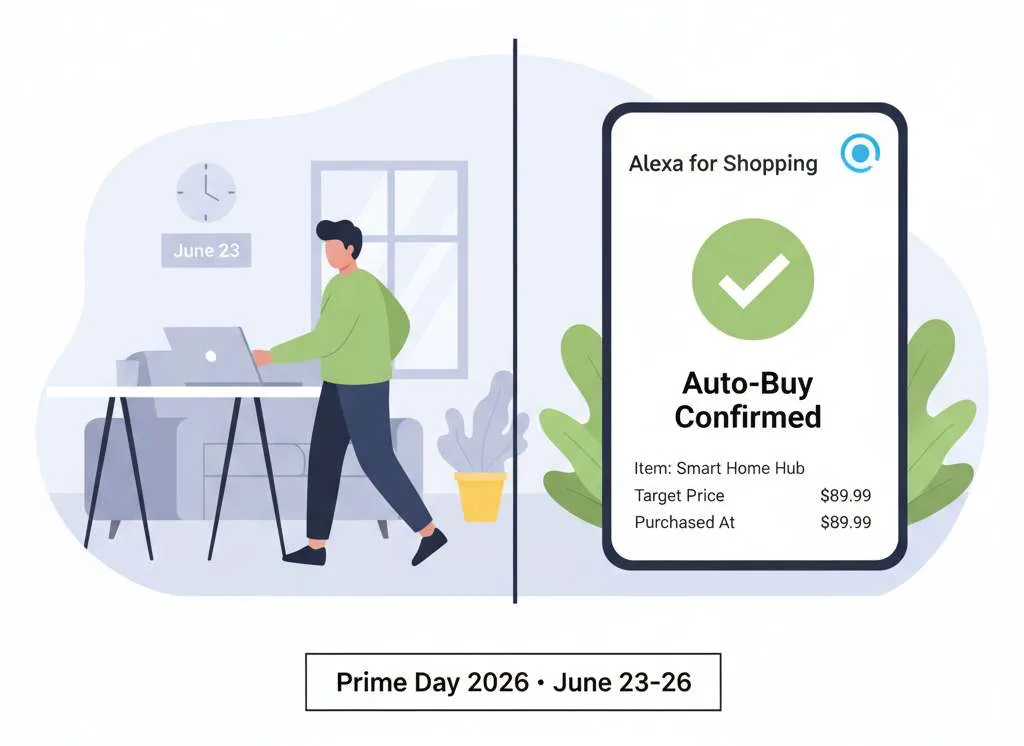
 Amazon set Prime Day 2026 for June 23–26, about three weeks earlier than the July window sellers planned around. The compressed calendar is real, but the bigger shift is who does the buying: with Alexa for Shopping, a shopper can set a target price, toggle auto-buy, and have the assistant purchase the moment an item hits that price, without ever opening your listing during the event. Winning Prime Day used to mean winning the shopper. This year it increasingly means clearing the price they handed to a machine and being the product that machine surfaces.
Key Takeaways
-
Prime Day 2026 runs June 23–26, kicking off at 12:01 a.m. PDT on June 23, about three weeks earlier than the typical July slot.
-
Alexa for Shopping (Amazon's agentic assistant, which folded in Rufus on May 13, 2026) lets shoppers set a target price and auto-buy an item the moment it drops, per Amazon's own announcement.
-
It also builds personalized deal recommendations from a shopper's browsing history and lists, meaning the assistant decides which products a buyer sees before a human compares options.
-
The earlier date compresses prep, but the durable change is that price competitiveness and listing findability are now judged by software in seconds, with no human in the loop on a growing share of purchases.
-
Sellers who treat this purely as a logistics deadline will miss the structural shift: the listing is being read by an assistant first, and the buyer second.
Why is the earlier Prime Day date the smaller half of this news?
Because the date is a scheduling problem, and scheduling problems get solved. Amazon confirmed Prime Day 2026 runs June 23–26, starting at 12:01 a.m. PDT on the 23rd. That is earlier than the July window most sellers built their inventory and ad calendars around, and the prep crunch is real: stock has to reach fulfillment centers well before the event, and ad budgets need restructuring now rather than the night before.
But every seller faces the same compressed calendar, so it is not where advantage is won or lost. Amazon’s VP of Prime, Jamil Ghani, told Reuters the company picked the week of June 22 with the FIFA World Cup, which runs June 11 through July 19, and the July 4 holiday marking the 250th anniversary of U.S. independence in mind, so members can stock up on groceries and household essentials before those events. Coverage from TechCrunch cross-verifies the dates and that essentials focus. The date is the headline. It is not the story.
What actually changed for sellers in Prime Day 2026?
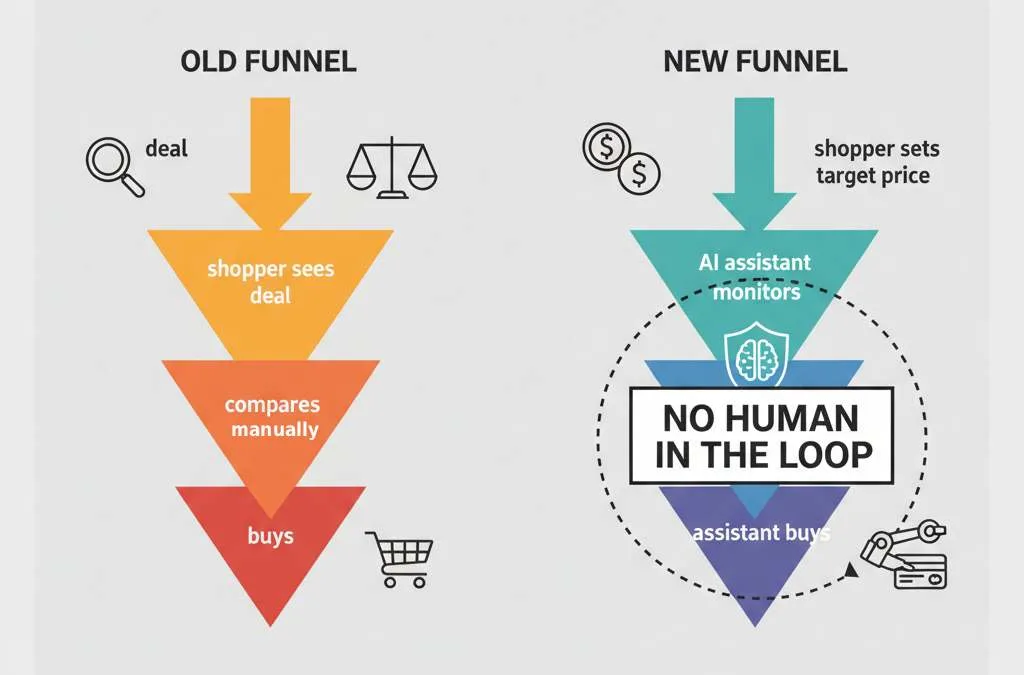
The buyer can now hand the purchase decision to an assistant. With Alexa for Shopping, a shopper can set a price alert on a specific item, turn on Auto Buying, and the assistant purchases it the moment the price hits the target, using their default payment method. Amazon describes the flow directly: set the alert on a laptop you find too expensive, and "a few days later" the assistant tells you it dropped to your target and completes the purchase.
That is the move that should reorganize how sellers think about the event. For years, winning Prime Day meant winning the shopper's attention in the moment: the hero image, the badge, the urgency. When the shopper sets a price and walks away, none of that fires. The assistant is the one watching, and it acts on a number.
How does the assistant decide which products a shopper even sees?
It pulls from what it already knows about the shopper. Amazon says Alexa for Shopping finds deals based on a shopper's browsing history and shopping lists, builds custom shopping guides that compare features, prices, and reviews across Amazon and the web, and surfaces AI-generated overviews at the top of search results before a buyer starts browsing.
So the assistant is filtering the field before a human compares anything. If your listing does not give the assistant a clean, complete, machine-readable answer to the category question, it is less likely to make the shortlist the shopper ever sees. The comparison is happening; you are just no longer in the room for it.
What should sellers do differently before June 23?
Two jobs run in parallel: clear the logistics deadline, and make the listing legible to the assistant. The first is familiar work on a tighter clock. The second is the one most sellers will skip, and it is the one that compounds. The split below separates the scheduling task from the structural one.
|
Lever |
The deadline read (scheduling) |
The structural read (the assistant) |
|---|---|---|
|
Inventory |
Ship to fulfillment centers weeks earlier to avoid stocking out on the four days that matter. |
An out-of-stock item is invisible to auto-buy; the assistant fulfills a set target only if you are available at the price. |
|
Price |
Set Prime Day promo pricing in advance. |
Your price is now a trigger another party set in advance; clearing the target buys the sale without a click. |
|
Listing content |
Refresh images, bullets, A+ for the traffic spike. |
Write for machine extraction: complete, specific, query-answering copy the assistant can parse and surface. |
|
Ad structure |
Rebuild campaigns now, not on the 22nd, to avoid burned spend. |
Assistant recommendations sit alongside paid placement; findability and relevance feed both. |
Action checklist
-
Confirm inbound shipments will clear fulfillment center processing before June 23, not on the 22nd.
-
Lock Prime Day promotional pricing now, and check each hero SKU against the target prices shoppers are likely to set.
-
Run your top three category queries through Alexa for Shopping and read what it surfaces and recommends today.
-
Rewrite the listing attributes that answer those queries directly, in complete and specific language rather than keyword strings.
-
Restructure Prime Day campaigns this week so spend is deliberate, not reactive.
-
Treat listing legibility to the assistant as a standing project, not a Prime Day sprint; the buyer behavior outlasts the event.
If you want to see how your catalog reads to Amazon's assistant before the event, Amazify's Listing Intelligence service audits exactly that.
The shopper still wants the best price. They just stopped being the one who waits for it.
Frequently Asked Questions
Prime Day 2026 runs June 23 through June 26, beginning at 12:01 a.m. PDT on June 23. It is a four-day event, earlier than the July window of recent years, and is confirmed in Amazon’s own announcement. It runs in 22 countries on those June dates, including the United States; Prime members in Australia, Brazil, India, and Japan get Prime Day later in the summer.
Amazon’s VP of Prime, Jamil Ghani, told Reuters the company chose the week of June 22 with the FIFA World Cup, which runs June 11 through July 19, and the July 4 holiday marking the 250th anniversary of U.S. independence in mind, so members can stock up on groceries and household essentials before those events. Amazon adds that it weighs major global events and holidays when setting Prime Day dates each year.
Alexa for Shopping is Amazon’s agentic AI shopping assistant, introduced May 13, 2026, which brought together the former Rufus assistant and Alexa+. It helps shoppers compare products, check up to a year of price history, set price alerts, and auto-buy items at a target price. The assistant itself is open to U.S. customers with no Prime membership or Echo device required, though auto-buy is currently limited to Prime members and items Fulfilled by Amazon.
Yes. Amazon’s documentation describes setting a price alert on an item, turning on auto-buy, and the assistant completing the purchase with the shopper’s default payment method when the item reaches the target price. The shopper sets it up once, then the assistant acts without further input. Two limits matter for sellers: auto-buy currently runs for Prime members only and only on items Fulfilled by Amazon, so seller-fulfilled listings are not eligible for it yet.
It shifts weight from in-the-moment persuasion toward price competitiveness and listing legibility. When a shopper sets a target and walks away, the deal happens if your price clears the target and your listing is the one the assistant surfaces. Hero images and urgency badges matter less for that share of purchases.
No. Amazon's assistant works from complete, specific, machine-readable product information to answer natural-language queries and build comparisons. Keyword strings without substance give the assistant nothing useful to extract. Clear, complete attribute coverage is what helps a listing get surfaced.
Ready to stop leaving money on the table?
Get a free margin audit and see exactly how much profit you're missing.
Book Your Free Audit →